
Federal BOP Release Record Scope
The Federal Bureau of Prisons inmate locator covers federal inmates from 1982 to the present. It should be used when a person was sentenced in federal court and committed to BOP custody. An arrest in Cobb County does not by itself create a BOP record. A person may begin in the Cobb jail, enter U.S. Marshals custody during a federal case, and appear in BOP only after designation or sentence processing.
BOP’s result can identify a federal prisoner and provide custody or release information. If the listed release date is in the past and the result shows no facility, BOP says the person was released from BOP custody on that date. That statement is specific. It does not mean every form of custody or supervision ended, and it does not explain a prior Cobb jail release.
Confirm a Federal BOP Release
Start with a reliable identifier and the correct system. Similar names can produce the wrong person, while a person awaiting federal placement may not yet appear as expected. Keep the Cobb booking or court case separate from the federal locator result.
- Open the official BOP inmate locator and search the person as a federal inmate.
- Match the result with the full name and any known federal register number or identifying details. Do not rely on a name alone.
- Read the listed facility or release date. A current institution points to BOP custody; a past release date with no facility means BOP custody ended on that date.
- Check the result again near an expected release because BOP warns that dates can change after sentence recalculation.
- Compare the federal result with the Cobb release record if the person first left the Adult Detention Center. The local record may show transfer rather than community release.
- If the person remains missing, consider the U.S. Marshals bridge, ICE custody, state custody, or another county instead of treating “no BOP result” as release proof.
The general Cobb County released inmate record path identifies the local record that should be compared with a federal result.
Read Federal Release Results
Three pieces of the BOP result carry different meanings. A facility identifies current BOP placement. A future date is an estimate that may be recalculated. A past date with no facility is the released-from-BOP indicator described by the agency. None of those fields states whether a probation officer now supervises the person or whether another agency took custody.
| BOP result | What it supports | Next check |
|---|---|---|
| Federal facility listed | The person is associated with a current BOP institution record. | Use BOP for custody and date updates. |
| Future release date | BOP currently projects release on that date. | Recheck because recalculation can change it. |
| Past release date, no facility | BOP says release from its custody occurred on that date. | Check supervised release and other custody systems. |
| No matching record | No confirmed locator match was found. | Check spelling, identifiers, USMS stage, or another custody system. |
The BOP records explanation shows how past dates and missing facility locations should be read.
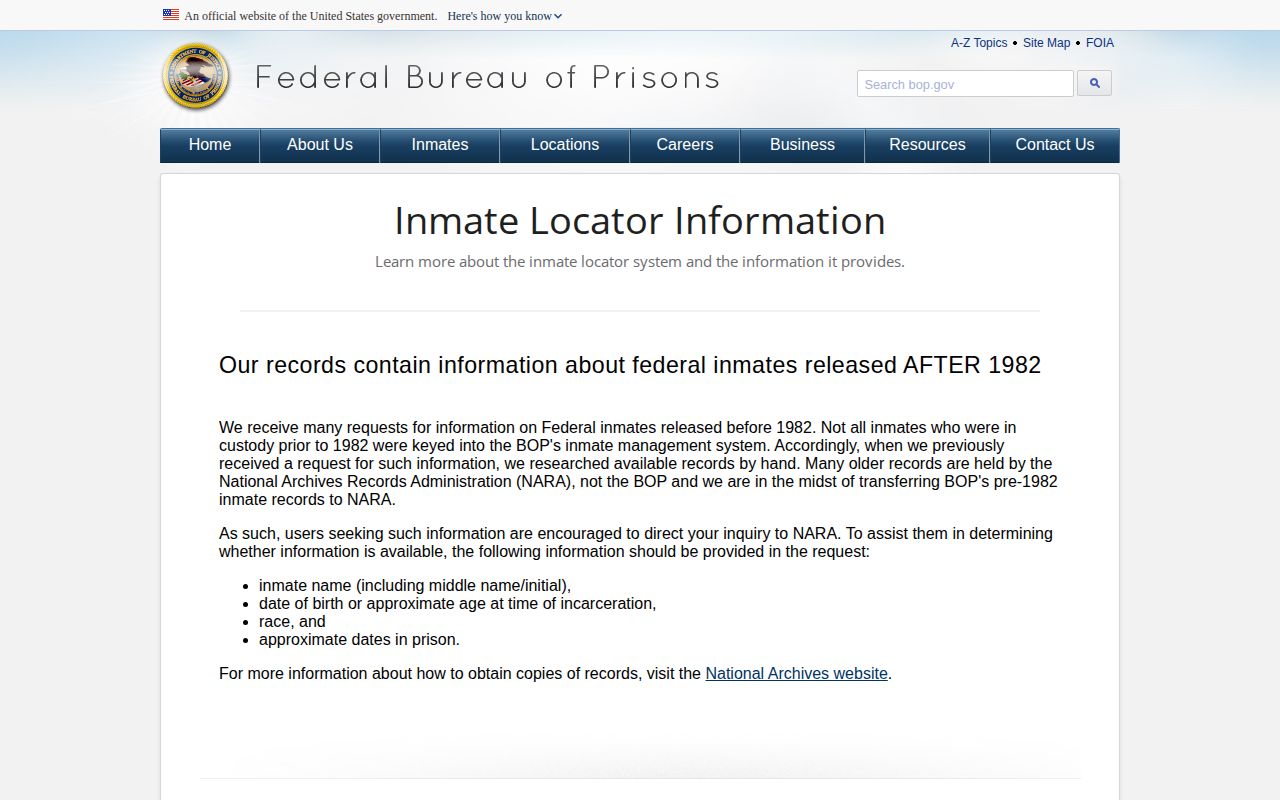
This official explanation supplies the narrow release meaning and the warning that another status may continue after BOP custody.
Federal Release Dates Can Change
BOP cautions that projected dates may change because sentence computations are recalculated. A court order, credit determination, or correction to the sentence record can affect the displayed date. The safest practice is to save the date checked, then search again shortly before the planned release. An older screenshot is not proof that the same date remains active.
A projected release date and an actual past release date should not be treated alike. The projected date helps with planning. The past date with no facility is BOP’s indicator that its custody ended. Even then, the person may begin federal supervised release, enter another correctional system, or face a separate hold. The receiving status must be verified through the agency that owns it.
- Federal register number
- An identifying number used to match a person in federal records.
- Sentence recalculation
- A new computation that can alter a projected release date.
- Supervised release
- A court-ordered federal supervision term that can follow prison custody.
- Transfer
- A custody move to another institution or agency rather than release to the community.
Note: BOP recommends periodic checks because an expected federal release date can change before custody ends.
USMS Bridge Before BOP Custody
The U.S. Marshals Service is a federal custody and transport bridge. Research for Cobb County shows that USMS assumes custody of people arrested by federal agencies and handles placement and transportation until acquittal or incarceration. A person may therefore be in federal detention while not yet appearing as a sentenced BOP prisoner at the expected institution.
This distinction matters after a Cobb arrest. A local jail record may show that the person left Cobb custody for a federal authority. That event is a transfer, not proof of freedom. During the next stage, USMS may control placement while the federal case proceeds. Once the person is committed to BOP custody, the BOP locator becomes the public release-date channel.
Use the federal court case and the Cobb release record to bridge the gap. Ask the Cobb Sheriff record for the release reason and receiving authority if disclosable. If it names federal transfer, do not use the absence of a Cobb roster entry as evidence that the person returned to the community.
Federal BOP Records and Contact
The locator is a nationwide federal service rather than a physical Cobb County facility. It does not have a Cobb jail desk, local visiting address, or Cobb release-record office. Use BOP’s official locator and record explanation for the federal custody phase. Use the Cobb Sheriff only for the earlier county booking, release, or transfer record.
Nationwide federal custody and release lookup
Coverage: 1982 to present
Official BOP Inmate Locator
The official locator view provides the search entry used for a federal release check.
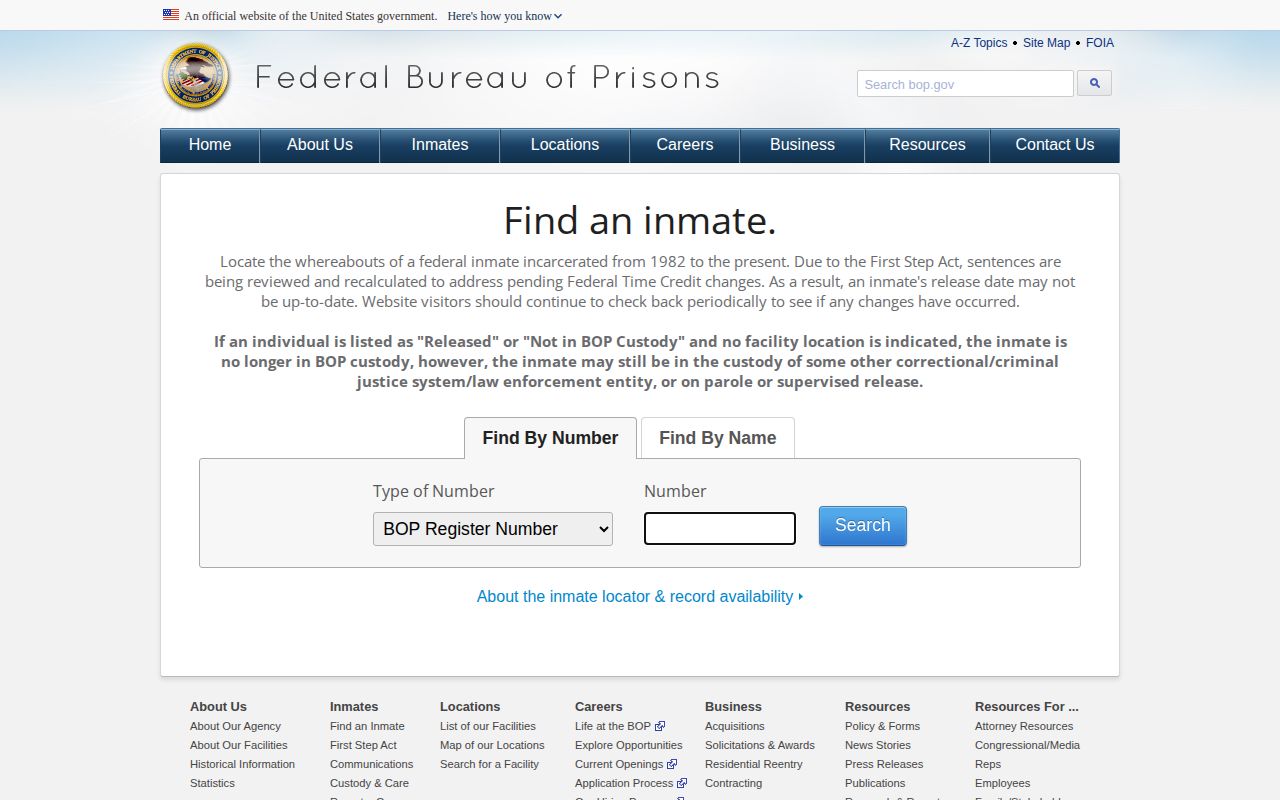
The BOP screen belongs to the federal system and should never be described as a Cobb County detention roster.
If the disputed fact is the date someone left the Cobb Adult Detention Center, contact the Detention Facility at (770) 499-4200, Records & Identification at (770) 499-4231, or Open Record Requests at (770) 499-4728. Ask for the release date, release type, and receiving agency. Georgia’s records procedure governs that county record, while federal procedures govern BOP material.
Cobb ICE History and Federal Release
Cobb’s older immigration history can create false assumptions in federal release research. Local reporting says Sheriff Craig Owens ended Cobb County participation in ICE’s 287(g) program in January 2021. An old booking record or news report may mention 287(g), but that history does not show a current BOP placement and does not make ICE and BOP interchangeable.
BOP handles federal prison custody after a federal sentence. ICE handles immigration detention. USMS handles federal custody placement and transport during another stage. If a Cobb record says only “federal hold” or “federal transfer,” obtain the receiving agency before choosing a locator. A BOP search cannot confirm ICE custody, and ICE’s locator is not a BOP release archive.
The practical chain is Cobb release record, named receiving authority, then that authority’s official system. This preserves the difference between community release and a transfer from one government custodian to another.
Cobb Jail Names Before Federal Transfer
Cobb’s jail history explains why local records can use several facility labels before a federal transfer. The Sheriff reports that Building A was completed in 1987, Building B in 1997, and C Tower in 2010. Together the towers have a stated bed capacity of 3,077. “Cobb County Jail,” “Adult Detention Center,” “Jail Complex,” and a tower reference can all point to the local detention operation.
Those names do not identify a BOP institution. They describe the Cobb custody stage that may precede a federal case. The Cobb Adult Detention Center description documents the local complex and its recordkeeping role. If a person moved from that complex to USMS or BOP, retain both records because each agency documents a different part of the timeline.
The Cobb record should answer when local custody ended and whether the event was a transfer. The BOP record should answer federal placement and federal release. Reading both prevents the local departure date from being mislabeled as release from federal prison.
Confirm Final Federal Release Status
Close the search by matching person, system, and date. A past BOP date with no facility confirms the end of BOP custody according to the agency’s own explanation. Then check whether supervised release follows and whether another correctional or immigration system has custody. The BOP locator cannot settle those separate questions.
When Cobb appears in the history, obtain the local release or transfer record as well. The two records may show different dates because they concern different custodians. A Cobb jail transfer can occur well before a BOP discharge. If no BOP result exists, revisit the federal court and USMS stage rather than filling the gap with an assumed release.
Note: Federal supervised release is not physical prison custody, but it can continue after the BOP locator shows release.