
Cobb 72-Hour Feed Status
The official Cobb County Sheriff pages reviewed do not provide a recent-release tab, a rolling three-day roster, or an archive labeled “released in the last 72 hours.” The Sheriff’s Adult Detention Center page instead points to an inmate search for people in custody. It says that current search provides criminal charges and bond amounts. A user cannot turn that description into a release archive that the agency has not published.
This gap changes the method. Rather than reading one roster, build a 72-hour timeline from dated events. Check whether the person remains in the Cobb jail, look for a VINE custody alert, review the correct court docket, and obtain the jail’s booking and release record. A transfer record is crucial because movement to GDC, another jail, or a federal agency may look like release from the local roster without being release to the community.
Build a Cobb 72-Hour Release Timeline
A three-day review benefits from fixed start and end points. Write down the approximate time the person was last known to be in Cobb custody, then gather each source in date order. That makes it easier to distinguish a true release from an update delay or transfer.
- Search the official Cobb custody system for the person. A match means the person is still displayed in county custody at the time checked.
- Review any VINE notice received during the three-day period. Record the custody source and event time without assuming the alert explains the legal reason.
- Check State Court for a misdemeanor or traffic matter, Magistrate Court for early case events, and Superior Court for a felony sentence or transfer.
- Call the Detention Facility at (770) 499-4200 when the online result is missing, uncertain, or unavailable.
- Request the release record from Records & Identification at (770) 499-4231 or through Cobb’s open-records channel for a durable answer.
- If the record indicates state transfer, move the search to GDC. Use BOP or ICE only for the matching custody type.
The Cobb 24-hour release method is better when the question concerns today alone. The 72-hour method is designed for a missed day or a weekend-sized gap.
Cobb Three-Day Release Fields
The online jail search has a narrow verified field set. The fuller release fields below come from the formal record inventory and should be requested, not presented as if they appear on a public 72-hour screen.
| Field | Role in a 72-hour review |
|---|---|
| Full legal name and aliases | Connects records that may use different name forms |
| SOID or booking number | Separates the right booking from another person or event |
| Booking date and time | Sets the start of the local custody episode |
| Release date and time | Places the end of Cobb custody inside or outside the three-day span |
| Release reason | Distinguishes bond, court order, time served, sentence completion, hold lifted, and transfer |
| Charges and case numbers | Connects the jail event to the court record |
| Bond instrument and amount | Explains a bond-based release when maintained |
| Receiving agency | Shows whether local release was actually a transfer |
Current charges and bond amounts can be checked in the Sheriff’s custody channel while the person remains listed. Exact release time, reason, and destination are better sought from the release record. The official Sheriff source also confirms that Records & Identification maintains incarceration records and court documents.
Note: Ask for one booking and a defined date span so staff can identify the Cobb County release event with less ambiguity.
Cobb Weekend Release Checks
A 72-hour span is practical after a weekend because a person may leave custody before a related court entry becomes easy to find. Cobb State Court states that today’s case-management updates are available the next day. That timing applies to court data, not the Sheriff’s inmate search, and it should not be treated as a jail update schedule. It does explain why a court event may trail the physical release.
Start with custody status, then return to the court docket after the next update cycle. A bond order can explain a release pending court. A sentence entry can show time served, probation, or a transfer to state prison. Dismissal or other case disposition may also explain the end of custody. For official or certified details, the court’s record takes precedence over the online courtesy display.
Holidays may produce the same practical gap, but Cobb has not published a special holiday release cadence. Avoid predicting when staff process a record. The safe approach is to call the jail for current status and request the completed release record once it is available.
Bond activity may also cross the boundary of the chosen window. Cobb recognizes cash, property, out-of-county property, professional, driver’s-license collateral, and pretrial release methods. Multiple charges can require multiple bonds. The date a bond was set, the time every required instrument was completed, and the time jail custody ended may not be the same. The Sheriff release record supplies the custody endpoint, while the bond and court records explain the steps that led to it.
Cobb Roster Data Quirks
Cobb’s most important release-data quirk is the mismatch between what users often seek and what the official web search says it covers. The public wants a recent-release history. The Sheriff describes a search for individuals in custody. That means an empty result can be useful, but it is never a full answer.
Several events can produce the same empty screen. The person may have been released on bond, completed a sentence, moved to another detention component, transferred to GDC, or left under a court order. A name mismatch or temporary outage can also prevent a match. During a 2025 interruption, the Sheriff’s maintenance notice told people seeking detainee information to call (770) 499-4200. The notice makes the phone route an official Cobb fallback, not a generic suggestion.
There is also no official statement that released names remain visible for one day, three days, or any other set time. A three-day search must therefore rely on dated source records instead of an assumed roster retention rule.
Request Cobb Three-Day Records
An open-records request can ask for all release events tied to one known person during a defined 72-hour period. It can also ask for the booking record, bond data, and transfer entry associated with that person. Keep the request tied to a name, identifier, and date range. Broad requests are less likely to answer a specific release question cleanly.
Georgia law provides the procedural framework. O.C.G.A. 50-18-71 calls for available records within three business days or an agency response describing the records and a production timetable. It also caps letter- and legal-size copy charges at 10 cents per page and makes the first quarter hour of search, retrieval, and redaction free. Those rules govern the records response, not the time it takes a jail event to appear online.
The Georgia Open Records Act page provides a visual reference for that access framework.
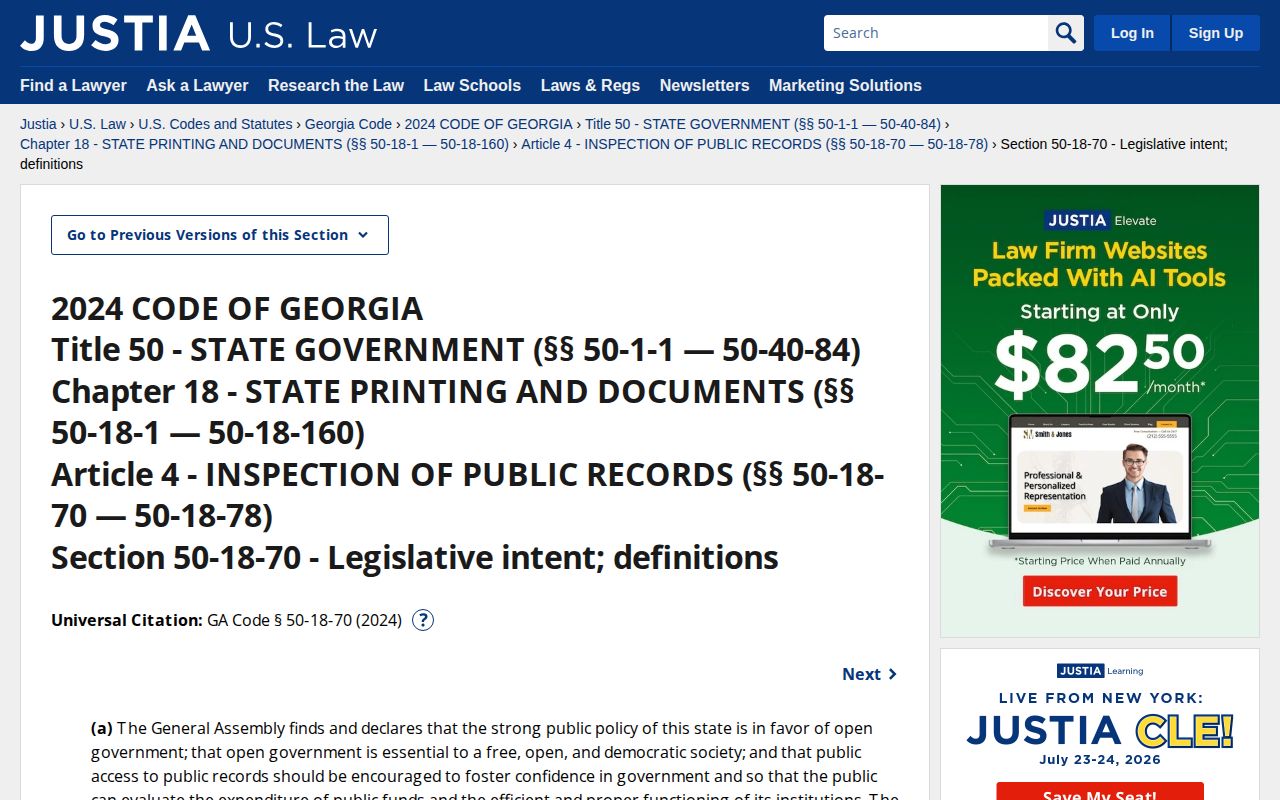
The statute supports requesting the durable Cobb record when no public three-day feed exists. Pair the response with the correct Cobb court. State Court handles traffic and misdemeanor records, Magistrate Court offers name, case-number, and citation searches, and Superior Court is the key court source for felony sentencing. The route matters during a multi-day review because an early Magistrate event, a later charging decision, and a final Superior Court transfer order can describe different stages of the same custody path. No single docket should be treated as a universal county release list.
Cobb Releases Across Systems
A three-day local timeline ends when Cobb custody ends, but the person’s custody story may continue elsewhere. The destination determines the next record source.
| Event | Next source | What it can confirm |
|---|---|---|
| Community release from Cobb jail | VINE, Sheriff release record, and Cobb court | Custody change and legal basis |
| Transfer to state prison | GDC offender search and Superior Court record | State custody and sentence details |
| Felony parole or probation | Parolee database and DCS Marietta | Post-release supervision path |
| Misdemeanor probation | Cobb State Court Sentence Enforcement Unit | Local reporting obligation |
| Federal prison release | BOP inmate locator | Past federal release date |
| Immigration custody | ICE Online Detainee Locator | Current ICE or qualifying CBP custody |
For a named-person search that crosses those systems, the Cobb County released-inmate lookup provides the complete county, state, court, federal, and supervision sequence.
Note: A transfer closes the Cobb custody episode but does not mean the person was released to the community during the three-day window.
Public Record Search
Sponsored Results