
Cobb Adult Detention Center Releases
The Cobb County Adult Detention Center, also called the Cobb County Jail Complex, is the Sheriff's main local custody facility. It holds both pretrial detainees and some sentenced detainees. A person can leave after posting an approved bond, receiving pretrial release, serving the ordered time, completing a local sentence, obtaining a court order, resolving charges, or having a hold lifted. Those results return the person to the community only if no other agency has lawful custody waiting.
Leaving this facility can also mean transfer. Cobb may transport a detainee to another county, a medical facility, a state or federal authority, or the Georgia Department of Corrections after sentencing. A jail record marked transferred is not the same as release to the community. When GDC receives the person, the statewide offender search and state records replace the Cobb jail roster as the main custody path. If another agency takes custody, that receiving system must be checked.
The Sheriff's booking and release record is the best local document for the date, time, reason, bond data, and transfer notation that Cobb maintains. Bond paperwork and a matching court docket can explain the legal basis. VINE can supply a registered custody-change notice. These sources answer different parts of the same event, so a strong confirmation uses the record tied to the reason custody ended.
Confirm Cobb Adult Detention Release
The official Adult Detention Center page links to Cobb's inmate search and says it covers individuals in custody, along with criminal charges and bond amounts. Start there to test current custody. A matching result means the person is still shown in Cobb custody at that moment. No result is a clue, not a final answer, because spelling, data lag, an outage, record limits, or a transfer can produce the same result.
Use the following sequence to verify a Cobb County Adult Detention Center release without treating the live roster as a release archive:
- Search the person's full name in the Sheriff's current-custody tool and record any charge, bond, or booking identifiers shown.
- Check a registered Cobb VINE notification for a custody change involving the Adult Detention Center.
- Review the proper Cobb court docket for a bond order, sentence, dismissal, transfer, or other disposition that explains the change.
- Call the Detention Facility line when the online search is unclear or unavailable.
- Request the booking and release record from Sheriff Records & Identification or through the Open Records channel.
Cobb does not publish a separately verified rolling release archive in the sources reviewed. That makes the records request especially important for an exact release time or reason. The full county search and record-request chain is also set out on the Cobb County released inmates home page. Ask for a record tied to a name, date range, booking or SOID number if known, and court case number when available.
Note: A person who does not appear in the current-custody search may have been released, transferred, or omitted because the query failed.
Cobb Detention Records and Contact
The Sheriff's Records and Identification Unit maintains arrest and incarceration records, fingerprints, photographs, and court documents for detainees housed in Cobb detention facilities. It handles dissemination under applicable GCIC and NCIC rules. That unit is the local record custodian to ask about a booking and release record. Georgia's Open Records Act applies its own response and fee rules, while exemptions and special limits may affect what is disclosed.
Cobb County Adult Detention Center
1825 County Services Parkway
Marietta, GA 30008
Detention Facility: (770) 499-4200
Jail Administration: (770) 499-4221
Monday-Friday, 8:00 a.m.-5:00 p.m.
Release Record Contacts
Records & ID: (770) 499-4231
Open Record Requests: (770) 499-4728
A clear request should ask for the booking and release or discharge record. Include the full legal name and aliases, approximate booking and release dates, SOID or local booking number if known, charges, and case numbers. Request the date and time released, release type or reason, bond instrument, and any transfer or hold notation that can lawfully be released. Booking photographs are subject to Georgia law and agency rules, so they are not an automatic part of every response.
About Cobb Adult Detention Center
The Sheriff's detention division description identifies the jail as a pretrial facility and places it within a division that also includes the Work Deployment Facility and Annex. Detention duties cover intake processing, medical care, food service, commissary, library services, security, work release, and custody of pretrial and sentenced detainees. Records maintenance is part of the same operation, which is why a release record stays with the Sheriff even after a person leaves the public in-custody display.
The Sheriff's published total bed capacity covers A, B, and C Tower. Capacity describes the facility, not the number of people currently held or released. Quarterly jail reports linked from the Sheriff page can provide operating context, but an individual release still requires the person's own custody, bond, or court record.
The source view of Cobb detention operations is shown on the official Adult Detention Center page.
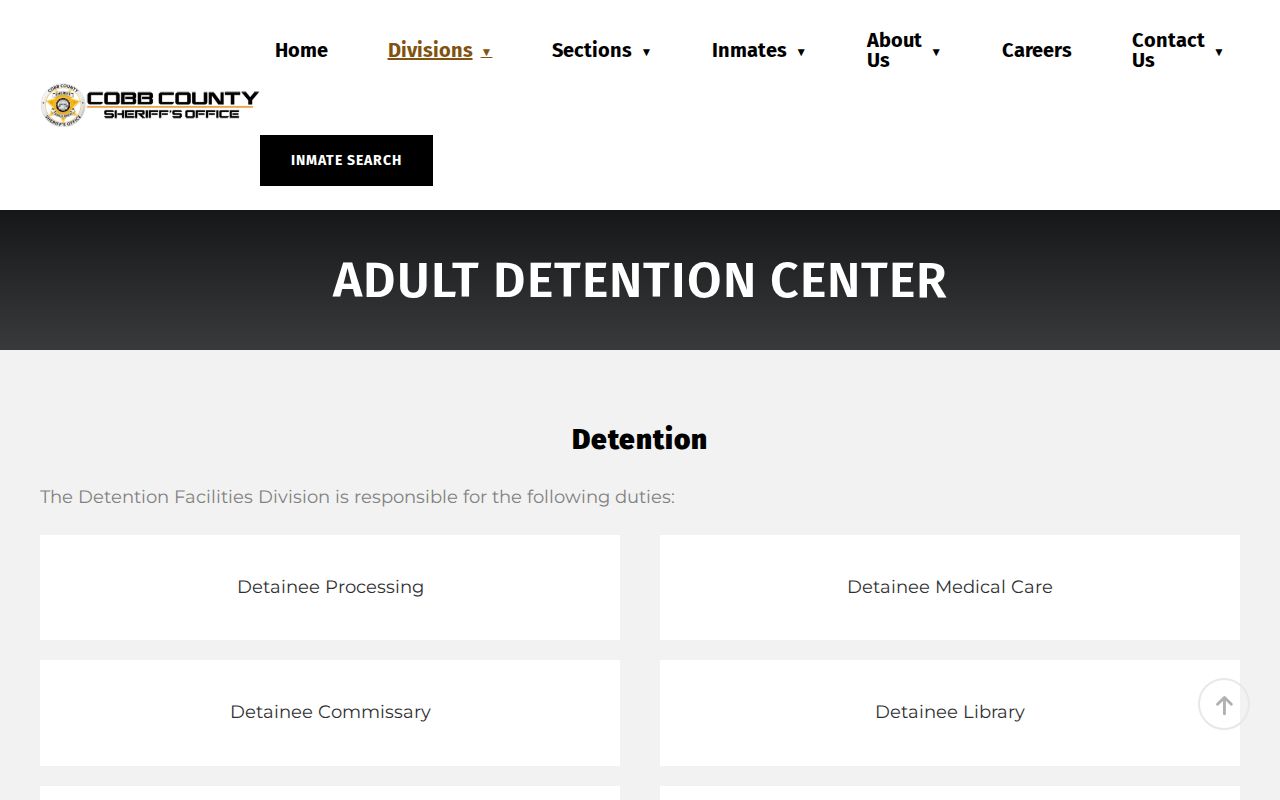
The captured page connects the Jail Complex, Work Deployment Facility, Annex, and Records and Identification Unit within one Sheriff detention workflow.
Cobb Detention Release Record Fields
A useful Cobb County Adult Detention Center request is specific about fields. The Sheriff confirms that it maintains incarceration records and court documents, but that does not mean every item is displayed online or open without limits. Asking for named fields helps the custodian identify the responsive record and explain any withheld part.
| Record field | What it can clarify |
|---|---|
| Booking identity and number | Connects the release to the correct Cobb detention event. |
| Booked and released date/time | Shows when local physical custody began and ended. |
| Release type or reason | Distinguishes bond, sentence completion, court order, hold release, or transfer. |
| Charges and court case | Links the jail event to the court disposition or bond order. |
| Bond amount and instrument | Explains a bond-based departure and the form of bond used. |
| Transfer or hold notation | Identifies another agency that may have taken custody, when disclosable. |
A Cobb release record may show a transfer even though everyday speech calls the event a release. Follow the destination. A GDC transfer belongs in the state offender system, while a bond release belongs with the local court and bond record. If the record is unclear, ask the Sheriff which field identifies the receiving authority rather than assuming the person went home.
Cobb Jail Release History
Cobb's facility history explains why one detention event may be described with several names. The Sheriff's official history says Building A was completed in 1987, Building B in 1997, and C Tower in 2010. Together they form the Jail Complex at the Adult Detention Center. A record may therefore refer to Cobb County Jail, the Adult Detention Center, the Jail Complex, a building, or a tower without pointing to a wholly separate release agency.
This naming issue matters during a records request. Give the facility name shown on the paper, but also identify the Cobb County Sheriff's Office detention event and the person involved. Records and Identification maintains records for detainees housed in Cobb County detention facilities, so the request can ask the unit to connect a tower or building reference to the same booking and final release action.
The Work Deployment Facility and Annex are also parts of the detention division, but they do not create a different public release archive in the cited Sheriff sources. Their residents remain within the shared Sheriff custody and record system. The exact facility component may be a useful requested field, yet the final release or transfer is still confirmed through Cobb detention records and the related court or receiving-agency record.
Note: Building and tower names describe parts of Cobb's jail operation, not separate public release databases.
Cobb Detention Release or ICE Transfer
An immigration transfer must be separated from a release to the community. If the Cobb County Adult Detention Center record indicates that another authority took custody, the destination field or transfer notation is central. The ICE Online Detainee Locator System can locate people currently in ICE custody, or in CBP custody for more than 48 hours, when the required identifying information is available. It is not a Cobb County release archive.
Cobb's history can add confusion. Local reports state that Sheriff Craig Owens ended Cobb participation in the federal 287(g) program in January 2021. Older records or news may still use 287(g) terms, but that historical program is not the current tool for confirming where someone went. Use the modern jail release record first. Then use ICE's locator only when a transfer, detainer, family report, court record, or agency notice points to immigration custody.
ICE locator searches may use an A-number and country of birth or biographical details. A missing result does not turn an agency transfer into community release. Timing, spelling, system scope, and custody of less than the locator's stated CBP window can affect results. Records from Cobb and the receiving agency remain the best way to separate release, transfer, and later custody.